
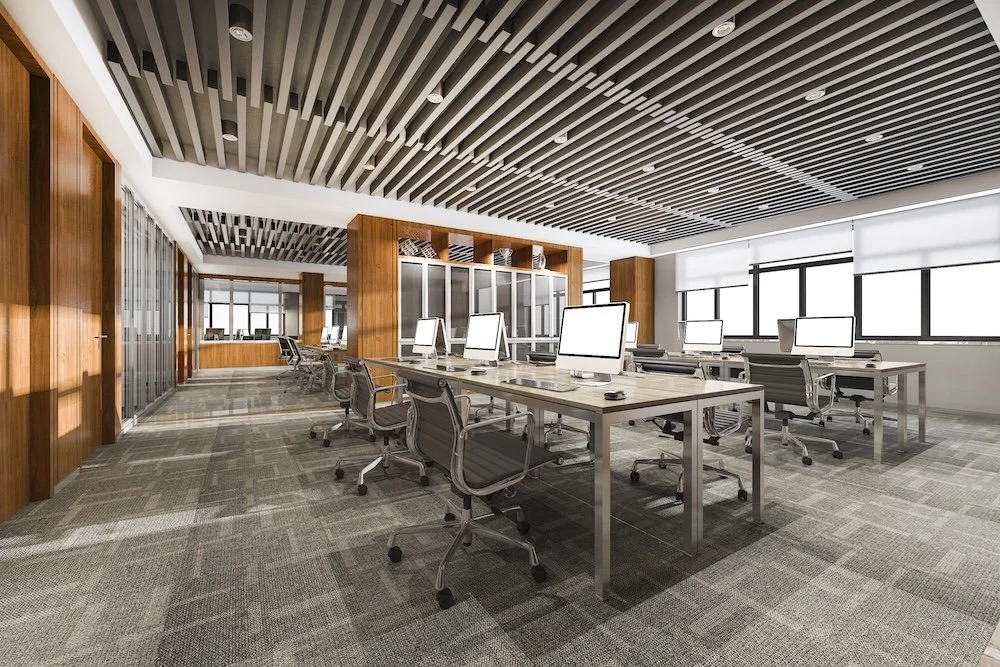
Exploring office space for rent is a significant step in any business's development. It marks an important milestone, especially for growing businesses looking to establish a professional workplace. Where a business operates can influence its brand image, client experience, and day-to-day operations.
Finding the right office space involves more than evaluating square footage and layout. It's also important to recognize potential issues and avoid common mistakes when renting an office for the first time. A suitable office should support employee needs, business operations, and convenient access for clients.
In this blog, you'll learn the key factors to consider when renting office space. From understanding lease terms and total occupancy costs to evaluating amenities and planning for growth, we'll cover what businesses should look for when choosing a space that meets their operational needs.
Start With Your Business Needs
Before searching for office space for rent near me, identify what your business needs from its workplace. Consider both your current requirements and how those needs may change as your company grows.
That's why it's important to plan for the future, not just the present.
Assess your current headcount and requirements for privacy, quiet areas, and collaborative workspaces. Businesses that regularly meet with clients may have different space requirements than those primarily focused on internal operations. Establish a realistic budget to help narrow your options and avoid unnecessary expenses.
Location and Accessibility
An office location can influence employee satisfaction, client accessibility, and brand image. Choose a property that offers convenient commuting options for employees and is easily accessible to clients and visitors. Consider proximity to public transportation and whether the location is practical for your team's daily commute.
A convenient location can also provide access to clients, business partners, and potential employees. When evaluating properties, review connections to major roads and highways. Consider traffic conditions during morning and evening rush hours, and check whether adequate parking is available for employees and visitors. If clients regularly visit your office, look into short-term or validated parking options.
Choose a neighborhood that aligns with your company culture and client expectations.
Understanding Rent and Total Occupancy Costs
Renting office space involves more than paying the advertised monthly rent. Total office rental costs may also include operating expenses, utilities, parking, maintenance, and other charges, depending on the lease agreement.
Here's a breakdown of the expenses to consider:
Base Rent
Base rent is the amount charged for occupying the office space. Commercial rent is often quoted as an annual rate per rentable square foot, although some properties advertise a monthly rate. The lease will specify how rent is calculated and whether scheduled increases apply.
Operating Expenses (OpEx / CAM)
Depending on the lease structure, tenants may pay a proportionate share of operating expenses, including common area maintenance, landscaping, cleaning, security, and property management. The amount varies by property and lease agreement.
Taxes & Insurance
Some lease structures require tenants to reimburse the landlord for a portion of property taxes and building insurance expenses.
Utilities & HVAC
Additional expenses may include electricity, water, and after-hours heating or cooling charges.
Connectivity & IT
Internet installation, telecommunications equipment, and recurring service fees can add to occupancy costs. Pricing depends on the provider, service requirements, and available building infrastructure.
Parking & Amenities
Some properties charge separately for reserved parking, visitor parking, or access to certain amenities.
Upfront Costs
Businesses should also account for expenses associated with moving into a new office. These may include legal fees, security deposits, space planning, construction or buildout, IT and security installation, furnishings, and moving expenses.
Lease Terms To Review
A commercial office lease is a legally binding agreement between the landlord and tenant. Understanding its terms, financial obligations, and restrictions is essential before signing.
Here are the key lease terms tenants need to understand and review:
Lease Duration & Commitment: Specifies how long the agreement remains in effect. Commercial office leases may run for several years, but terms vary by property. Consider how the proposed lease length aligns with your business plans and flexibility needs.
Rent Structure & Rate: Explains how rent is calculated and which expenses are included. A gross lease typically includes certain operating expenses in the rental rate, while a triple net (NNN) lease generally requires tenants to pay base rent plus their share of property taxes, insurance, and common area maintenance (CAM).
Rent Escalation Clauses: Outline scheduled rent increases, which may be based on fixed percentages or the Consumer Price Index (CPI).
Termination & Break Clauses: Establish the conditions and potential costs associated with ending a lease early.
Renewal & Expansion Options: Describe any rights to extend the lease or occupy additional space.
Subletting & Assignment: Specify whether and under what conditions a tenant may sublease or transfer its lease.
Maintenance & Repairs: Clarify whether the landlord or tenant is responsible for HVAC, plumbing, electrical systems, and other repairs.
Alterations & Build-Out: Establish requirements for renovations, approvals, and any restoration obligations when the lease ends.
Security Deposit: Specifies the required deposit and conditions for its return.
Guarantees: Outlines any personal or corporate guarantees required under the agreement.
Space, Layout, and Amenities
In addition to square footage, businesses should consider how an office is arranged. An efficient layout can support daily operations, employee comfort, and collaboration. Building amenities may also influence the overall workplace experience.
Square-footage requirements vary based on the number of employees, workstation sizes, private offices, meeting rooms, and shared spaces. Rather than relying on a single square-footage benchmark, evaluate how your team uses the office and allow room for anticipated growth. Include storage, circulation areas, and other support spaces in your calculations.
Consider a layout that provides an appropriate combination of collaborative areas, private offices, and quiet workspaces. Natural and artificial lighting, ventilation, temperature control, and acoustic privacy are also important considerations.
When evaluating amenities, consider the features that matter most to your operations. These may include reliable high-speed internet, HVAC systems, building security, kitchen or break areas, clean restrooms, adequate parking, and convenient access to public transportation. Depending on your business, backup power, advanced access controls, or specialized technology infrastructure may also be priorities.
Planning for Future Growth
When balancing cost and flexibility, businesses should also consider how their office requirements may change. Look for properties that meet current operational needs while offering flexibility for potential growth or changes in staffing.
Here are several factors to evaluate:
Space & Scalability
Consider whether additional square footage may become available in the building or whether flexible office arrangements could accommodate future changes. Ask about expansion opportunities without assuming adjacent space will be available when needed.
Layout Flexibility
Look for floor plans that can accommodate different workstation arrangements, private offices, collaborative areas, or hybrid work schedules.
Total Cost & Additional Expenses
Account for base rent, utilities, CAM charges, property taxes, insurance, and potential buildout or furnishing expenses. Consider how these costs may change throughout the lease term.
Location & Accessibility
Prioritize convenient access to public transportation, parking, clients, business partners, and nearby amenities.
Infrastructure & Tech
Confirm the availability of high-speed internet, reliable HVAC, sufficient electrical capacity, and technology to support virtual or hybrid meetings.
Lease Terms & Legal Protection
Review lease duration, renewal provisions, potential rent increases, subleasing and assignment rights, and liability obligations.
Questions To Ask Before Leasing
To protect your budget and make an informed decision, ask important questions and confirm key details with the landlord before signing a commercial lease. These questions address costs, lease terms, building features, and daily operations.
Here's a checklist of questions to ask:
What is the total monthly cost, including base rent, building fees, and utilities?
How and when does the rent increase over time?
Can I sublease the space or end the lease early if my business needs change?
How are usable and rentable square footage calculated, and what is the building's load factor?
Is the space move-in ready, or will I need to pay for additional improvements and setup?
Are alterations allowed, and does the landlord provide a tenant improvement allowance?
Is there 24/7 building access, and what security measures are in place?
Who handles repairs, including HVAC and plumbing, and what are the expected response times?
What parking options and costs are available for employees and clients?
Common Leasing Mistakes To Avoid
Businesses leasing office space for the first time may overlook expenses, restrictions, or property conditions that affect their long-term plans. Carefully reviewing the space, lease terms, and building infrastructure can help prevent unexpected costs and operational challenges.
Here are some common mistakes to avoid:
Underestimating total occupancy costs by overlooking utilities, maintenance, taxes, and insurance.
Agreeing to significant rent increases or uncapped adjustments without reviewing the long-term financial impact.
Overlooking upfront setup and buildout costs for furnishings, wiring, and customized improvements.
Misjudging space requirements, resulting in unused space or overcrowded work areas.
Failing to consider future growth or changes in staffing during the lease term.
Skipping an in-person property tour, including a visit during regular business hours.
Ignoring employee commute times, nearby amenities, and parking availability.
Overlooking accessibility requirements, including applicable ADA standards, and building security.
Failing to evaluate HVAC, plumbing, electrical systems, and internet infrastructure.
Rushing the lease review without fully understanding the agreement's financial obligations.
Failing to understand whom the real estate broker represents and whether their interests align with yours.
Starting the office search too late, leaving limited time to compare properties and negotiate terms.
FAQ
1. What expenses are included in an office lease?
The expenses included in an office lease depend on its structure. A full-service gross lease typically includes certain building operating expenses in the quoted rent, although additional charges or expense increases may apply. Under a triple net (NNN) lease, tenants generally pay base rent plus their proportionate share of property taxes, insurance, and common area maintenance. Modified gross leases divide specific expenses between the landlord and tenant according to the agreement.
2. What questions should I ask before signing a lease?
Before signing, ask about total occupancy costs, upfront expenses, maintenance responsibilities, rent increases, renewal options, and early termination provisions. Understanding these terms can help prevent unexpected expenses and complications.
3. What is the difference between base rent and total occupancy cost?
Base rent is the amount charged for occupying the office space. Total occupancy cost includes base rent plus applicable operating expenses, utilities, service fees, and other costs associated with using the property.
4. What should I look for in office space?
Consider total occupancy costs, accessibility for employees and clients, and lease terms. Make sure the space accommodates your current team and anticipated growth while providing the technology, infrastructure, and amenities needed for daily operations.
5. How much office space does my business need?
Office space requirements depend on headcount, workplace layout, meeting rooms, private offices, and other shared areas. A preliminary planning range of approximately 125 to 250 square feet per employee may be useful for some traditional office layouts, but actual requirements can fall outside that range.
To develop an initial estimate, multiply your expected on-site employee count by an appropriate square-footage allowance, then adjust for any additional space requirements and anticipated growth.
Be careful not to count shared areas twice if they're already included in your per-employee estimate. A space planner or commercial real estate professional can help confirm the appropriate square footage for your layout.
Riverview Innovation Center - A Landmark Multi-Use Facility Available To Rent
At Riverview Innovation Center, we understand that choosing office space involves several important considerations. Every business has different staffing requirements, operational needs, and growth plans, making it important to find a property that fits both current and future priorities.
Beyond commercial lease expenses, businesses should evaluate location, accessibility, building features, and available space configurations before making a decision.
Businesses exploring office space for rent can contact us at Riverview Innovation Center. Located in the Village of Menands in New York's Albany Capital Region, our multipurpose property offers a convenient location within the region's Tech Valley business community. Its location provides access to regional transportation routes for employees, clients, and visitors.
With a variety of available spaces and floor plans, Riverview Innovation Center offers options for businesses with different operational requirements. Schedule a visit to explore the property and find an office space that meets your needs.